Exterior cleaning,
all handled in
one visit.
We can clean the building, sidewalks, drive-thru, dumpster pad, gutters, and exterior glass during the same scheduled visit. We bring hot-water, soft-wash, surface-cleaning, and water-fed equipment so each area gets the method it needs.
Full Menu
Here is what we clean and the method we use.
Soft Washing
A gentler way to clean delicate surfaces.
We apply a diluted cleaning solution at low pressure, give it time to loosen algae and mildew, and rinse it away. We use this method on roofs, siding, stucco, and other surfaces that can be damaged by high pressure.
- Siding — vinyl, fiber cement, aluminum, and wood
- Stucco, EIFS, and dryvit
- Brick and painted masonry
- Soffit, fascia, and gutter faces
- Awnings and fabric canopies
- Asphalt shingle and tile roofing
Pressure Washing
For concrete, block, and other hard surfaces.
Concrete, block, and structural masonry can handle more pressure. We adjust it to the surface and use a rotating surface cleaner on large flat areas so sidewalks and pads are cleaned evenly.
- Concrete sidewalks, aprons, and entries
- Block and structural masonry
- Loading docks and truck aprons
- Pavers and hardscape
- Retaining walls
- Equipment yards and pads
Hot Water Washing
Hot water is used for grease, oil, and gum.
Cold water is not enough for grease, oil, and gum. We use water heated to 180–200°F, along with the appropriate cleaner, to loosen oily buildup so it can be removed instead of pushed across the surface.
- Dumpster pads and enclosures
- Drive-thru lanes and teller wells
- Restaurant service areas and grease trap surrounds
- Fuel islands and pump aprons
- Gum, oil, and tire transfer
- Kitchen exhaust walls
Building Washing
A complete wash for the building exterior.
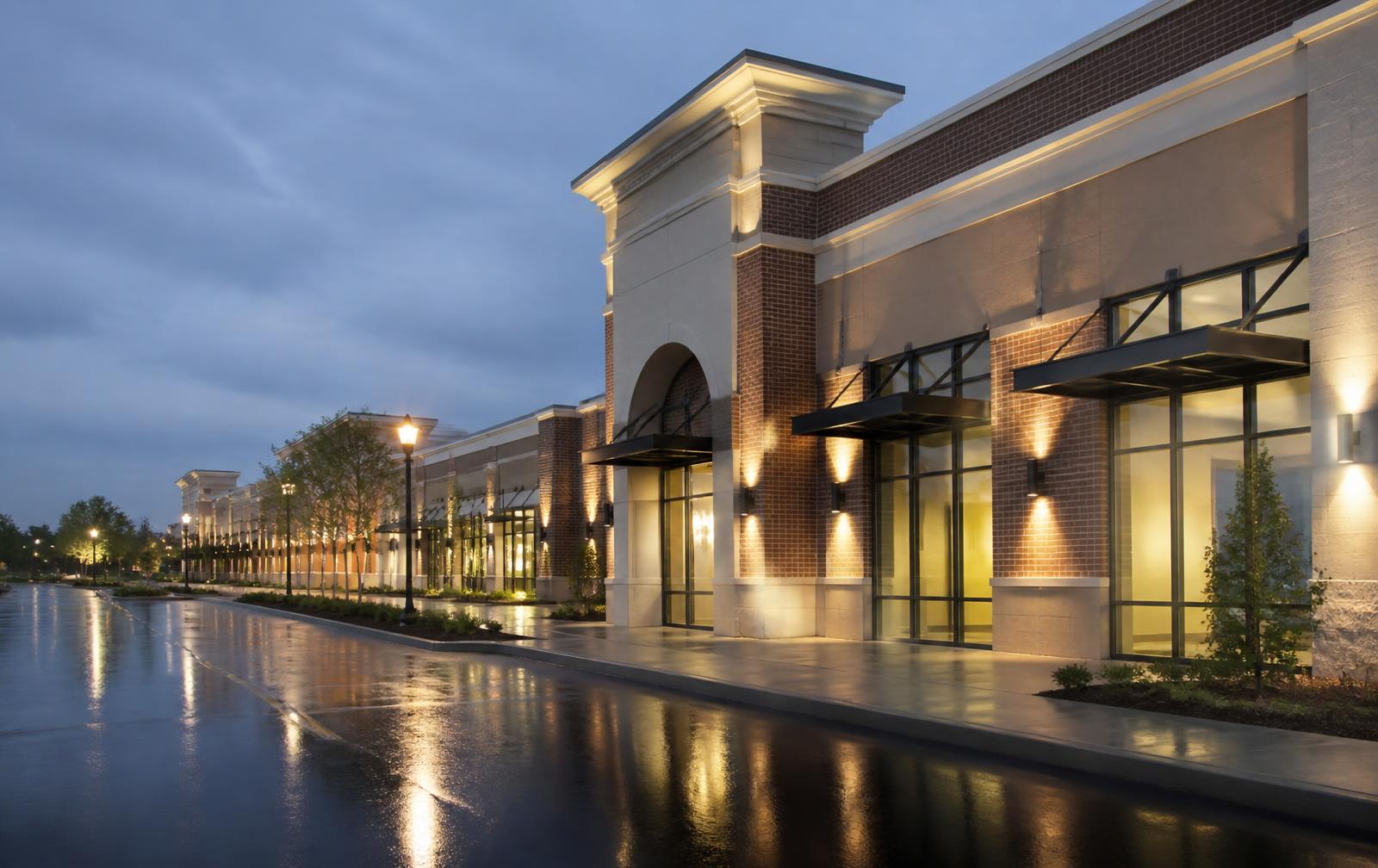
A building may include brick, painted panels, stucco, glass, and concrete. We change the method as the surface changes and use ground-based poles and extension equipment wherever access allows.
- Full building faces to four stories
- Storefront and retail facades
- Multi-building campuses and office parks
- Breezeways, stairwells, and corridors
- Entry canopies and vestibules
- Signage and illuminated panels
Concrete & Flatwork
Sidewalks, entries, pads, and other flatwork.
We clean large concrete areas with a rotating surface cleaner that keeps the nozzles at a consistent height. This is more even than cleaning the whole area with a wand and helps avoid visible lines in the finished surface.
- Sidewalks and entry walkways
- Parking lots and drive aisles
- Loading areas and aprons
- Pool decks and amenity flatwork
- Stairs and landings
- Curbs and wheel stops
Drive-Thru & Canopy
Drive-thru lanes, equipment areas, and canopies.
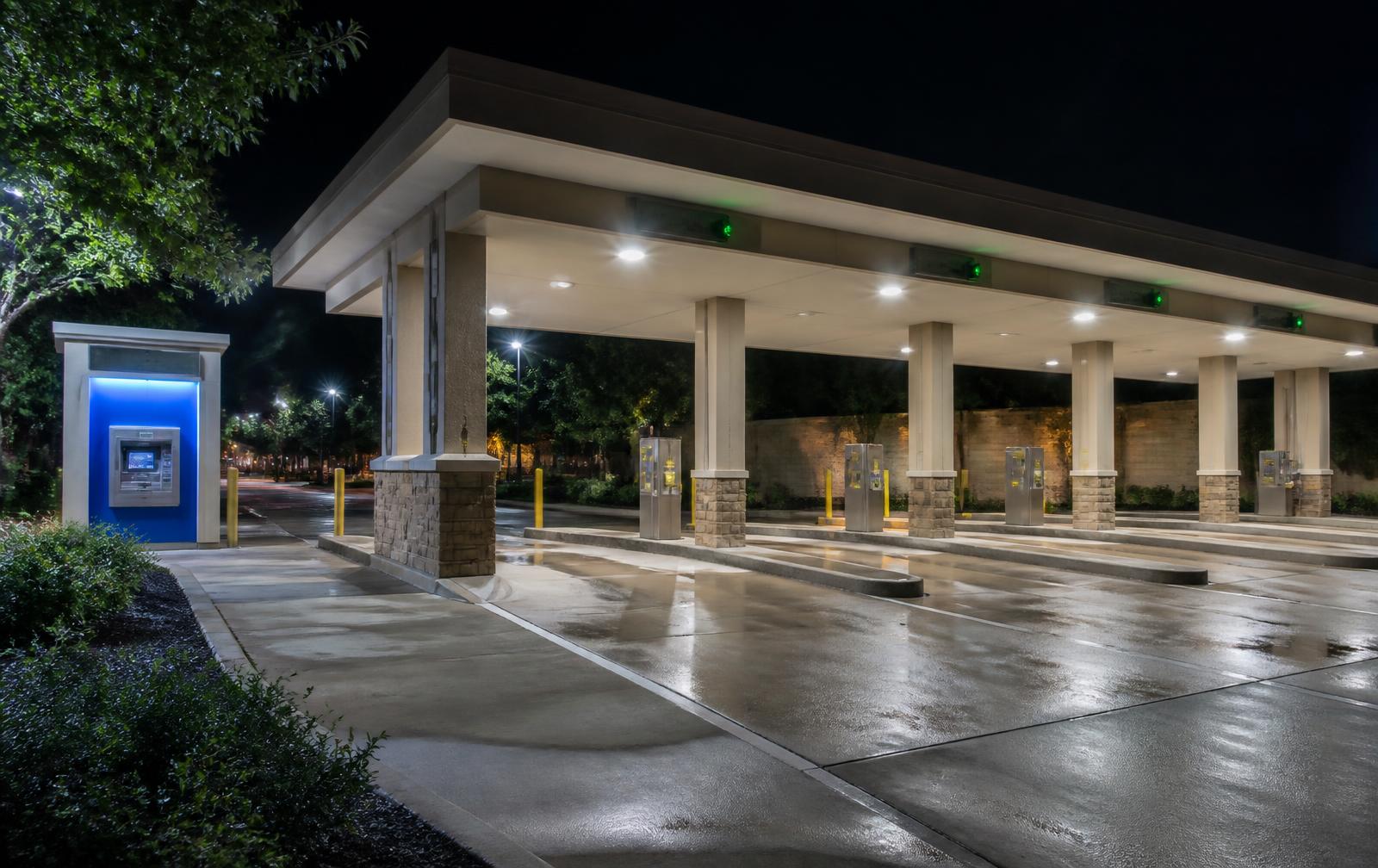
Drive-thru lanes collect oil, rubber, gum, and other traffic soil. Canopies and equipment areas need a lighter touch. We use the appropriate method for each area and usually schedule the work outside business hours.
- Drive-thru and drive-up lanes
- ATM surrounds, islands, and bollards
- Teller wells and pneumatic tube areas
- Canopy ceilings, fascia, and columns
- Menu boards and order points
- Night deposit approaches
Parking Decks
Cleaning planned around traffic and drainage.
We clean parking decks in sections so the property can keep as many spaces open as possible. Because deck runoff may contain oil and rubber, we review the drains before work begins and include water recovery when it is required.
- Deck levels and drive aisles
- Ramps and turn areas
- Stairwells and elevator lobbies
- Columns, walls, and ceilings
- Striping preparation
- Drain and trench cleaning
Window Cleaning
Exterior glass cleaned from the ground where possible.
Our water-fed pole system uses filtered water that dries without leaving mineral spots. It lets us clean many second- and third-story windows from the ground, without leaning a ladder against the building.
- Storefront glass and entry doors
- Second and third story glass from the ground
- Drive-thru and teller glass
- Frames, sills, and mullions
- Post-construction glass
- Interior glass on request
Dumpster Pads
Hot water, degreaser, odor control, and recovery.
Dumpster pads often need more than pressure washing. We use hot water and a commercial degreaser, address odor where needed, and recover the wash water when drains or local rules require it.
- Pad and enclosure floors
- Enclosure walls and gates
- Grease trap surrounds
- Compactor pads
- Degreasing and deodorizing
- Full water recovery
Gutter Cleaning
Vacuum clearing from the ground, with camera verification.
We use a commercial gutter vacuum with carbon-fiber poles to clear debris from most gutters without ladders. A pole-mounted camera lets the operator see the channel and confirm the run is clear.
- Reach up to four stories from the ground
- Cyclone II 3600W vacuum, 20-gallon stainless tank
- 40-foot carbon fiber clamping pole kit
- Downspout clearing
- Debris bagged and removed from the property
- Camera inspection of every run
Soft Wash
Some surfaces need a gentler wash.
High pressure can damage siding, stucco, EIFS, painted wood, awnings, and asphalt shingles. On those surfaces, we use a low-pressure application that gives the cleaner time to work before we rinse it away.
The active ingredient is sodium hypochlorite, the same active ingredient used in household bleach. We dilute it for the material and the amount of growth, then add a surfactant so it stays on the surface long enough to clean. The solution is applied at about garden-hose pressure and thoroughly rinsed.
The dark streaks on asphalt shingles are usually organic growth. High pressure can remove protective granules from the shingles, so we treat the growth with a roof-safe solution instead. The treatment may continue to lighten the remaining discoloration after the visit as rain rinses the roof.
Protecting your landscaping
Any cleaner strong enough to treat algae will stress a shrub if it is applied to dry roots. Every bed, lawn, and planter near the work gets soaked with fresh water before we start, rinsed during the application, and rinsed again at the end. Water in the soil dilutes anything that reaches it.
Pressure & Volume
Pressure and water flow both matter.
People usually ask about pressure, but water flow matters just as much. Our equipment produces up to 3,500 PSI at eight gallons per minute. The higher flow helps rinse away the soil that pressure loosens and lets us clean large concrete areas efficiently.
For sidewalks, pads, and other broad areas, we use a rotating surface cleaner. It holds the nozzles at a consistent height and produces a more even finish than washing the entire area with a wand.
Pressure alone will not remove everything. Oil, grease, gum, and tire marks usually require hot water, a degreaser, or both. We note that in the scope instead of promising that a standard concrete wash will take care of it.
Why grease is a separate line item
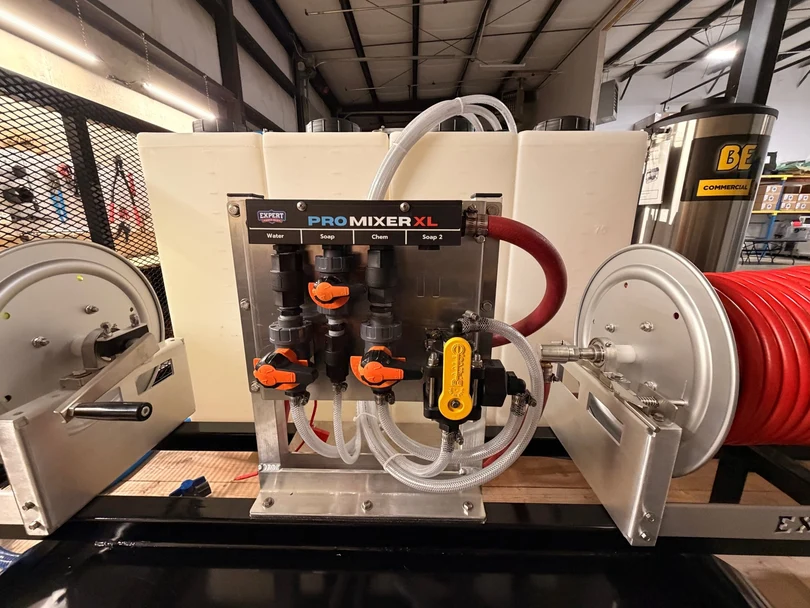
Grease does not respond to a standard cold-water wash. We heat the water to the appropriate temperature and apply a commercial degreaser so the buildup can be loosened and collected. Heavier deposits may need more than one pass.
Degreasing costs more because it uses additional cleaner, fuel, labor, and often water recovery. We list it separately so you can see exactly what the added charge covers.
Hot Water
Grease usually requires heat and degreaser.
Hot water helps loosen grease, chewing gum, tire marks, and rubber transfer. It also allows the cleaner to work more effectively. We use it on dumpster pads, restaurant service areas, drive-thru lanes, fuel islands, and other areas with oily soil.
Starting point
About 165°F for light grease
Typical range
180–200°F for heavier buildup
Equipment
Hot water on every Cloudburst trailer
Water Recovery
Some jobs require us to recover the wash water.
Wash water that contains grease, soap, paint residue, or other contaminants generally cannot be allowed into a storm drain. Requirements vary by property and location, so we check the drainage before we quote the work. Dumpster pads, fuel islands, and parking decks commonly need containment and recovery.
When recovery is needed, we contain the work area, protect nearby drains, vacuum the water, and remove it from the property. Our trailers have 100 gallons of recovery capacity. The quote will show recovery as a separate item when the job requires it.
Recovery in four steps
- 1Wash the surface with the right method and temperature.
- 2Berm the area and cover nearby storm drains.
- 3Vacuum the wash water before it leaves the work zone.
- 4Haul it off the property for proper disposal.
Gutter vacuum specs
- Vacuum
- Cyclone II 3600W, 20-gallon stainless tank
- Motors
- Three 1200W motors
- Airflow
- 379.6 CFM
- Water lift
- 94.56 inches
- Pole kit
- 40-foot carbon fiber clamping poles
- Reach
- Up to three or four stories
- Power
- 240V / 30A generator, L14-30 plug
- Hose
- 16-foot, 2-inch ID included
Gutter Cleaning
We clear gutters from the ground whenever we can.
Ladders are not always necessary. Our gutter vacuum uses a 20-gallon stainless tank and three motors to pull leaves, sludge, and compacted debris out of the trough while the operator stays on the ground. The 40-foot carbon-fiber pole kit reaches most three- and four-story gutters.
A camera mounted on the pole lets the operator see inside the gutter and confirm the run is clear before moving on. Debris is bagged and removed from the property, not blown into the landscaping.
Power and safety notes
The vacuum runs on 240V/60Hz and needs a gas generator rated for at least 5,500 starting watts and 5,000 running watts, fed through a 30-amp L14-30 twist-lock outlet. The carbon pole has a Kevlar-reinforced base section, but carbon fiber is still conductive, so we keep clear of overhead power lines and electrical equipment.
Compare the Methods
We choose the method for the material we are cleaning.
Gentle wash
Low pressure, cleaner does the work. Used on anything painted, coated, or shingled.
- Vinyl, fiber cement, and wood siding
- Stucco, EIFS, and dryvit
- Painted brick and masonry
- Soffits, fascia, and awnings
- Asphalt shingle and tile roofs
Pressure wash
Higher pressure and volume. Used on hard surfaces built to take it.
- Concrete sidewalks and entries
- Block and structural masonry
- Loading docks and aprons
- Pavers and hardscape
- Retaining walls and equipment pads
Not sure which method your property needs? Send us the address and a few photos and we will tell you.
Get a QuoteTell us what you would like cleaned.
Send the address and a few details. We will review the property and send you a written scope and price.